
The Adaptation Paradox: Why Change Is Personal, but Transformation Is Hard
Humanity thrives on a single, dominant survival skill: adaptation.
From our first steps as children to the professional mastery we achieve as adults, we are biologically engineered to evolve. In the natural world, successful adaptation is the standard of our existence, not the exception.
Yet, a stark paradox cripples the corporate landscape. Despite our innate individual brilliance at evolving, over 70% of organizational transformations collapse under their own weight.
Enterprises routinely paralyze at “inflection points”—those high-stakes moments where a single strategic choice determines whether a company scales to new heights or enters a death spiral of stagnation. If we are born to change, why do our organizations consistently fail to do so?
The failure resides in the void between strategic intent and systemic execution. Organizations do not fail because they lack a plan; they fail because they cannot navigate the friction created by legacy structures, deep-seated insecurities, power hierarchies, and misaligned incentives.
To bridge this gap, a mandate is insufficient. Leaders need a Catalyst.
The distinction is clear: Change is personal; Transformation is systemic. An individual can change their mind, but a system will protect its current state at all costs. Systems do not evolve through inertia; they evolve only when leadership possesses the raw courage to dismantle and reshape them. This is not a soft skill—it is a strategic necessity.
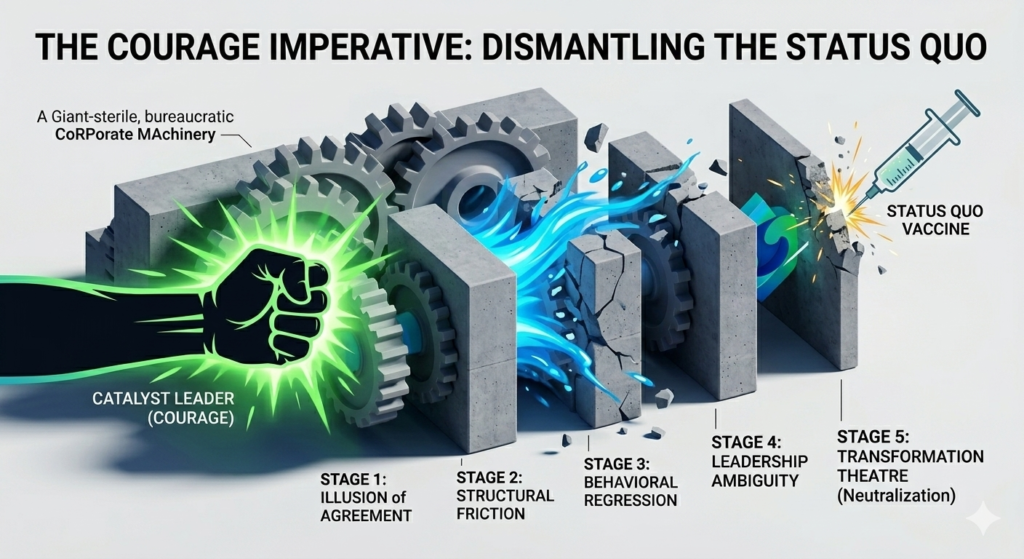
This is the Courage Imperative.

The Anatomy of Failure: What Transformation Collapse Actually Looks Like
Transformation failures rarely announce themselves with a bang. An organization does not wake up to find its strategy has collapsed; instead, failure unfolds as a “slow-motion breakdown,” often disguised as progress. Dashboards remain green, steering committees meet religiously, and consultants polish sophisticated roadmaps. From the outside, momentum appears intact.
Inside the system, however, the Courage Imperative is already being tested—and failed. Understanding this anatomy is the first step toward preventing it.
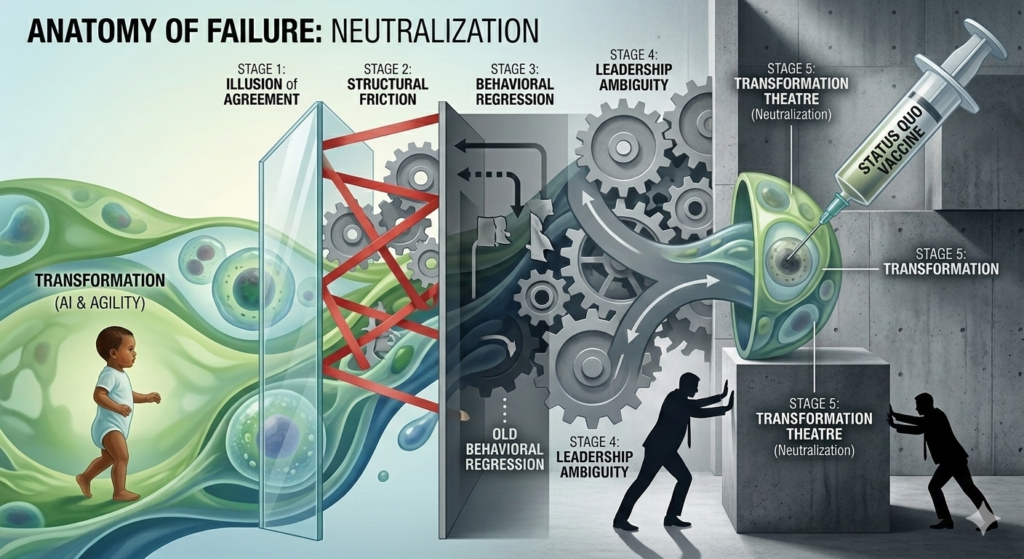
Stage 1: The Illusion of Agreement (Announcement Surge)
Every transformation begins with an intoxicating surge of energy. Leadership defines a bold vision—be it a digital overhaul or a cultural reinvention. At this stage, alignment appears universal. However, a subtle trap is set: Agreement on the idea of change is mistaken for agreement on the implications of change. The organization supports the future—until it begins to understand the personal and structural cost of getting there.
Stage 2: Structural Friction (The System Strikes Back)
As vision translates into operational reality, the first layer of resistance appears. It isn’t loud; it’s a quiet, grinding friction.
- The Collision: Legacy processes collide with new workflows.
- The Design Logic: What leadership perceives as “implementation issues” are actually structural contradictions. The new system demands speed, but governance rewards caution; the strategy calls for collaboration, but systems of power and incentives reward individual silos. The transformation isn’t failing yet—it is simply exposing that the organization was originally designed to maintain the very stability the transformation seeks to disrupt.
Stage 3: Behavioral Regression (Survival over Sabotage)
As friction increases, the organization unconsciously retreats. This is the Adaptation Paradox in reverse: when confronted with the “Unknown,” the human brain defaults to the “Known.”
- Teams reintroduce spreadsheets outside the new system.
- Managers create informal “shadow” approval channels to “keep things moving.” This isn’t sabotage; it’s survival. Without a unified vision and a clear roadmap of milestones, people default to past habits. When the “New Way” feels like a threat to their identity or security, they revert to the “Old Way” to regain a sense of control.
Stage 4: Leadership Ambiguity (The Courage Gap)
The most critical moment in a transformation is when this friction finally reaches the leadership team. Here, the Courage Imperative becomes visible. When faced with the structural contradictions the transformation has surfaced, many leaders choose accommodation over confrontation. They grant exceptions to influential stakeholders. They extend timelines without addressing root causes.
Insecure Leadership takes over: fearing the loss of status or the discomfort of conflict, they quietly centralize authority. Each compromise feels reasonable in isolation, but collectively, they erode the transformation’s integrity. What was meant to be systemic change is downgraded to incremental improvement.
Stage 5: Transformation Theatre (Neutralization)

In the final stage, the transformation becomes a performance. The organization learns to simulate progress while remaining exactly the same.
- The Shell: Steering committees review dashboards and adoption metrics are reported.
- The Reality: Milestones are reframed rather than achieved. The system has effectively “vaccinated” itself against the change. It has absorbed the transformation without allowing itself to be reshaped by it. At this point, the transformation has not failed—it has been neutralized.
The Root Cause: A Lack of Holistic Ownership
This breakdown happens because transformation is too often treated as a series of technical tasks rather than a fundamental shift in Mindset. When leaders fail to own the transformation as their top priority, they fail to build the conviction needed to push through Stage 4. Without a Catalyst to reinforce new behaviors and policies, the organization’s “immune system” will always win.
The Catalyst: Breaking the Cycle of Neutralization
If transformation is an act of evolution, then a Catalyst is the agent that accelerates the reaction, lowering the activation energy required for the system to change. In business, a Catalyst is anyone—or any entity—that fundamentally alters the speed and success of a transformation by removing friction and fostering alignment.
The Spectrum of Catalysts
A catalyst is not always a single person; it is a role played at different levels of the organization:
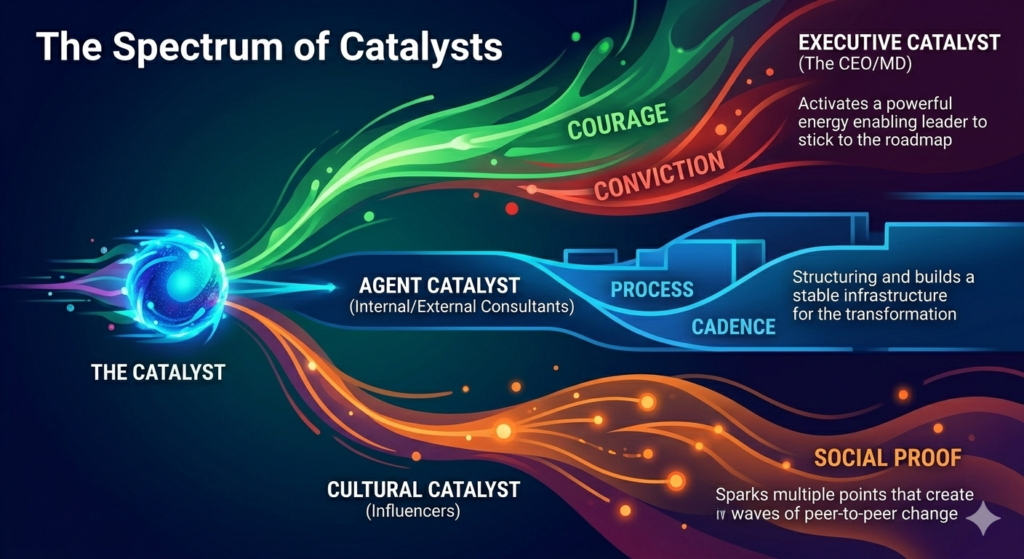
- The Executive Catalyst (The CEO/MD): This is the ultimate, non-negotiable catalyst. Without the leader’s personal stake in the outcome, the organization treats the transformation as a temporary disruption to be waited out. They provide the courage to face the leadership ambiguity and the conviction to stick to the roadmap.
- The “Agent” Catalyst (Internal/External Consultants): These catalysts act as the architects of the process. They don’t “do” the transformation; they provide the infrastructure—the systems, the cadence of oversight, and the objective reality check that leadership, deep in the trenches, often loses sight of.
- The Cultural Catalyst (Influencers): These are the high-performers and respected mid-level managers who embody the “new way.” When they are empowered to lead, they transform the “social proof” of the organization, moving change from a top-down mandate to a peer-led movement.
The Role of the Leader: The Courage Imperative
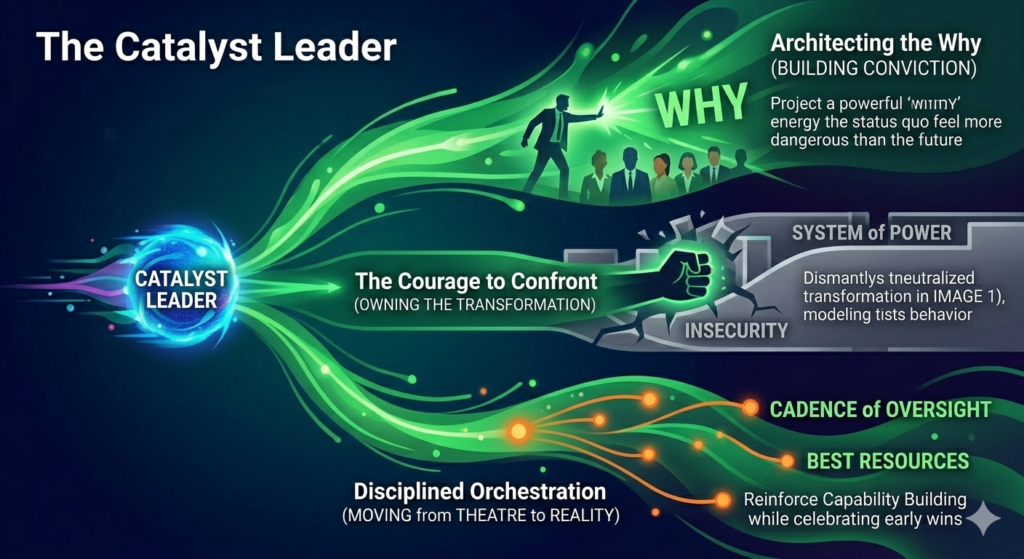
A transformation is a journey that favors the bold. While a consultant can provide the map, only the leader can be the heart that pumps life into the new system. To ensure success, the leader must move beyond “management”. Transformation is a high-stakes arena that demands more than just strategy; it demands leadership in its rawest form. The leader’s role in ensuring success is defined by three core responsibilities that directly counter the anatomy of failure:
1. Architecting the “Why” (Building Conviction)
Leaders often fail because they focus on what needs to change rather than why. A true Catalyst-Leader builds a narrative that makes the status quo feel more dangerous than the uncertainty of change.
Transformation fails when the “Why” is weak. The leader must set sufficiently high aspirations—not just “better,” but “outstanding.” They must build a narrative that creates conviction, ensuring that employees understand that the extra effort required is not just a burden, but a pathway to a better future. Without this “shared narrative,” employees lack the willpower to endure the friction of the middle stages.
2. The Courage to Confront (Owning the Transformation)
You cannot mandate a behavior you do not practice. The Catalyst-Leader must:
- Acknowledge the Pain: They don’t grant “exceptions” to stakeholders just to keep the peace. They lean into the structural contradictions (siloed power, outdated incentives) rather than accommodating them.
- Model the Behavior: You cannot mandate a behavior you do not practice. If the organization needs to be more transparent, the leader must be the first to expose their own vulnerabilities and mistakes. If it calls for agility, the leader must be the first to adopt new decision-making cadences. They become the role model for the behaviors they want to see, reinforcing new policies not just by decree, but by practice. By doing so, they signal that the “Old Way” is no longer an option.
3. Disciplined Orchestration (Moving from Theatre to Reality)
A Catalyst-Leader knows that “transformation theatre” is the natural enemy of progress. To prevent the organization from “neutralizing” the change, they:
- Establish a Cadence of Oversight: They treat the transformation as a business-critical operation, not a side-project. They hold the “cadence of oversight” meetings that are non-negotiable, ensuring accountability.
- Allocate the “Best” Resources: They don’t assign the “available” people to the project; they assign the “best” people. They understand that a transformation is an investment in the future, and it requires their most capable assets.
- Reinforce Policies: Updating HR policies, reporting lines, and governance to support the new structure.
- Encourage Rewards and Recognition: Publicly celebrating those who embrace the “New Way” and holding those accountable who cling to the “Old Way.”
- Invest in Capability Building: A leader must ensure that the organization isn’t just “trying harder,” but “getting better.” This means investing in the hard and soft skills required to close the capability gap.
The Shift: From Manager to Catalyst
A manager maintains the status quo; a Catalyst disrupts it to create something superior. By shifting the focus from “pushing” the organization to “catalyzing” its natural capacity for adaptation, the leader moves the transformation out of the realm of theory and into the reality of performance.
The Commitment Checklist: Prerequisites for True Transformation
If the “Anatomy of Failure” is the disease and the “Catalyst” is the doctor, then these prerequisites are the vital signs. Without them, even the most sophisticated framework will eventually become “Transformation Theatre.”
Transformation is not a software patch; it is an overhaul of the organizational nervous system. Before a leader can successfully utilize the Catalyst Framework, five non-negotiable prerequisites must be met:
1. Total Commitment of the CEO/MD
A transformation cannot be “delegated.” If the top leader views the change as a side-car to the “real” business of the company, the organization will sense it instantly. The CEO must see the transformation as their top priority, giving it the same—if not more—engagement, attention, and focus as the quarterly board report. In nature, a catalyst must be present in the reaction for it to occur; in business, the leader must be present in the struggle for it to succeed.
2. Willingness to Pursue Full Potential
Most organizations stop at “good enough” because “outstanding” is too painful. Leaders must have the appetite to go after the full potential of the transformation. This requires a shift in mindset:
- The Long View: Recognizing that “Rome was not built in a day” and having the stamina for a journey of significant effort.
- The High Aspiration: Setting a level of ambition that is uncomfortable. If the goal doesn’t require people to change their fundamental behavior, it isn’t a transformation—it’s an optimization.
3. Allocation of the “Crown Jewels” (People and Resources)
The quality of a transformation is determined by the quality of the people leading it. A common failure point is assigning the “available” people to the project—those who have spare time because they aren’t critical to daily operations. To succeed, leadership must be willing to commit the organization’s best resources. This means taking your top performers out of their comfort zones and putting them at the helm of the change. If it doesn’t “hurt” the daily business to move these people, you haven’t moved the right people.
4. Radical Trust in the Catalyst Process
Transformation creates uncertainty, and uncertainty creates the urge to micromanage or revert to old habits. Leaders must commit to the Catalyst Framework approach—Explore, Engage, and Execute—and trust the process even when it surfaces uncomfortable truths.
- Trusting the Discovery: Being willing to hear the “Explore” phase results, even if they implicate leadership.
- Trusting the Co-Creation: Allowing the “Engage” phase to actually influence the solution, rather than just rubber-stamping a pre-determined plan.
5. Benchmarking Against Excellence
Transformation occurs in a competitive vacuum at your own peril. Leaders must be willing to benchmark against other successful transformations—both within and outside their industry. This provides an objective yardstick for “what good looks like.” It prevents the organization from grading itself on a curve and forces it to measure progress against world-class standards of execution.
The Final Verdict
Meeting these prerequisites is the “Courage Imperative” in action. It is the moment where leadership stops talking about change and starts making the hard choices that make change possible.
Once these foundations are laid, the organization is no longer just “adapting” to survive; it is catalyzing to lead.
Conclusion: Reclaiming Our Natural State
We began with a fundamental truth: humans are born to adapt. We are the most successful “change agents” in the history of the planet. The fact that 70% of organizational transformations fail is not a reflection of human inability, but a failure of organizational design and leadership courage.
The Adaptation Paradox—that we are brilliant at change as individuals but broken as collectives—is solved when we stop fighting human nature and start working with it.
From Inertia to Evolution
Transformation fails when it is treated as a mechanical process to be managed. It succeeds when it is treated as a biological necessity to be catalyzed. By moving through the Catalyst Framework, leaders do more than just implement new software or redesign an organization chart:
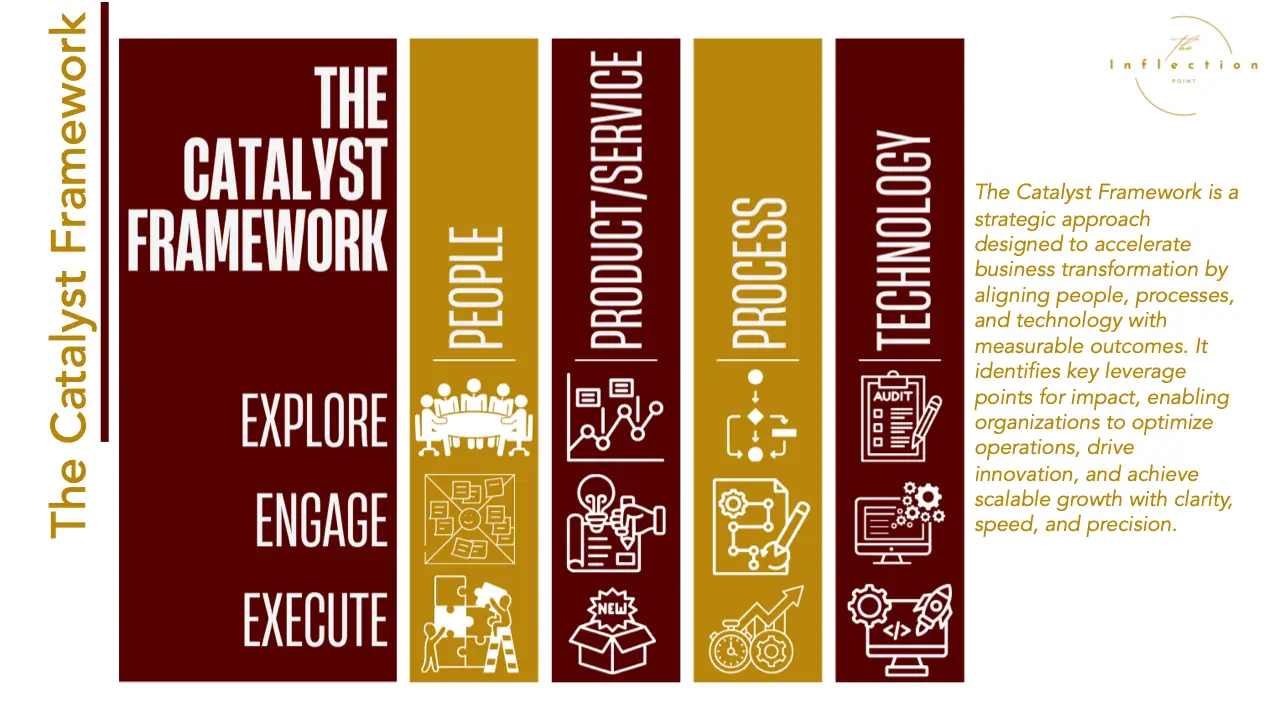
- Through Explore, they replace “Transformation Theatre” with objective truth.
- Through Engage, they replace “Behavioral Regression” with agency and co-creation.
- Through Execute, they replace “Leadership Ambiguity” with disciplined, visible momentum.
Success ultimately rests on the Courage Imperative. It requires leaders who are brave enough to put everything on the table, secure enough to empower their best people, and disciplined enough to trust a proven process over their own insecurities.
When a leader steps into the role of a Catalyst, the organization stops resisting change and starts embracing its natural capacity for evolution. We were born to adapt; it is time our organizations did the same. The path from stagnation to transformation is difficult, but for the leader willing to be the catalyst, it is the only path that leads to a future worth inhabiting.